Does Sweat Irritate Sensitive Skin, or Is It What You Do Afterwards?
Quick Answer: Sweat itself is mildly acidic and largely well tolerated by most skin. What irritates is usually the aftermath: sweat left to dry and concentrate on the skin, friction from damp fabric, a hot shower immediately afterwards, and an aggressive cleanser used on a barrier that is already warm, permeable, and vulnerable. In most cases the flare is caused in the 20 minutes after exercise, not during it.
Below, the questions people actually ask - each answered directly first, then explained.
Is sweat itself irritating to sensitive skin?
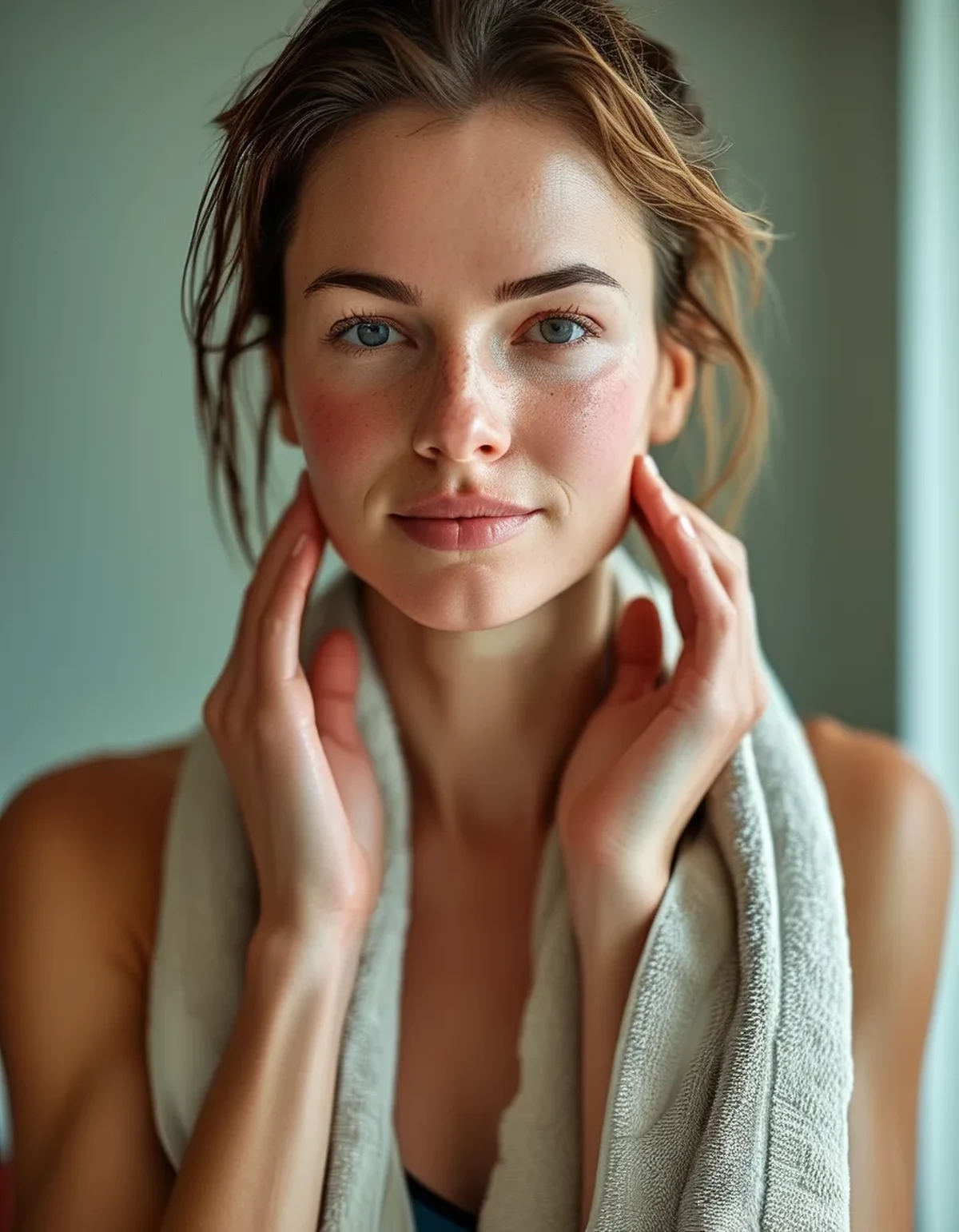
For most people, no - fresh sweat is not the problem. Sweat is roughly 99% water with sodium, chloride, urea, lactate, and small amounts of other compounds, and it sits at a mildly acidic pH close to the skin’s own surface. Fresh sweat is broadly compatible with a healthy barrier.
Concentration is what changes it. As the water evaporates, everything dissolved in it stays behind. Salt concentrates on the skin surface, and salt on a compromised barrier is drying and can sting - especially around the eyes, nose folds, and anywhere already inflamed.
There is a genuine exception worth knowing about. A small proportion of people react to their own sweat with itchy hives - cholinergic urticaria - which is triggered by the rise in body temperature rather than the sweat itself. Hot showers and spicy food will do it too, which is the giveaway.
And sweat carries whatever is on your face with it. Sunscreen, makeup, hair product, and sebum all mobilise and migrate as you sweat. The hairline and jaw flares people blame on sweat are frequently product migration instead.
Practical version: fresh sweat, wiped or rinsed reasonably soon, is not the enemy. Sweat left to dry fully on the face is where it starts costing you.
Why does my skin flare after exercise and not during it?
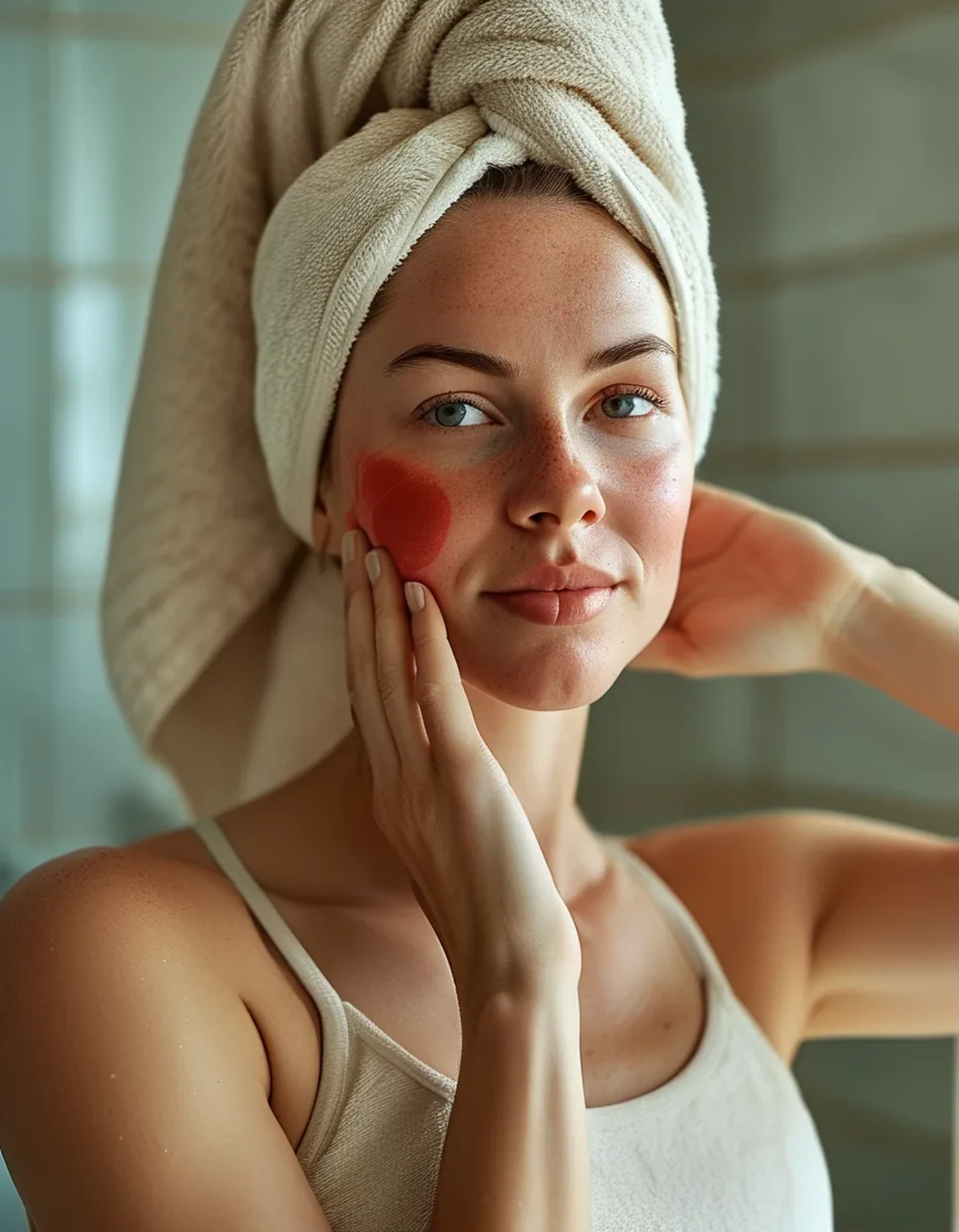
Because the barrier is at its most permeable exactly when the post-workout routine happens. Exercise raises skin temperature and blood flow, and warm, hydrated skin absorbs more of whatever touches it. That is fine for a moisturiser and bad for a strong cleanser or an active.
Post-exercise flushing is a circulatory response, not damage. Blood vessels dilate to release heat. In most people it settles in 20 to 30 minutes. If it routinely takes over an hour, or comes with stinging and visible vessels, that is worth a professional look - it can be a rosacea pattern rather than a sensitivity one.
The hot shower is the most common single trigger. Hot water strips surface lipids from a barrier that is already open. Lukewarm - around body temperature - is the whole change, and most people who make it see a difference within a week.
Then there is the compulsion to over-clean. Feeling sweaty produces the urge to double-cleanse and scrub, which is the exact opposite of what an inflamed, warm barrier needs. A single gentle cleanse is sufficient.
Timing gives it away. If your flare appears 10 to 40 minutes after you finish - the window in which you showered, cleansed, and applied things - the trigger is in the routine, not the workout.
How soon do I actually need to wash my face?
Sooner is better, but gentler matters more than faster. A rinse within roughly 20 to 30 minutes prevents salt concentrating and stops product-laden sweat sitting in creases.
If you cannot shower, plain water is enough. A splash of lukewarm water and a soft towel pat removes most of the salt load. You do not need a cleanser at the gym, and using a harsh one there is worse than doing nothing.
Micellar water on a cotton pad is the reasonable travel option - but wipe rather than rub, and follow with water when you can. Facial wipes are the weakest choice: they combine friction with surfactants left on the skin.
Pat, never rub. Warm skin plus a rough towel is mechanical irritation on top of everything else. Press the towel and lift it - and use a clean one, because a gym towel that has been in a bag all week is its own problem.
Moisturise while the skin is still slightly damp, within about three minutes. That is when the water content is highest and a simple occlusive holds it in. Something plain - glycerin, ceramides, squalane - not something new.
What about the clothes and the friction?
Friction from damp fabric is a bigger driver of body flares than sweat is. Wet fabric moving across skin repeatedly is mechanical abrasion, and it is why irritation appears at the bra band, waistband, and inner thighs rather than everywhere.
Change out of damp kit promptly. The prolonged occlusion of wet fabric against warm skin is what turns friction into a rash. This single change resolves most post-workout body irritation without any product involvement.
Seams and labels matter more on sensitive skin. Flatlock seams and printed labels reduce the number of hard edges dragging on damp skin. Anything that leaves a mark after an hour is doing it every session.
Laundry detergent is a genuinely common hidden cause. Residual detergent and fabric softener in activewear are activated by sweat and heat. If your irritation traces the exact shape of a garment, look at the wash, not the skin - an extra rinse cycle and skipping softener is a free test.
And check the seasonal shift. Late summer into autumn means layering damp kit under a jacket for the walk home, which extends the occlusion time considerably - the same routine that was fine in July starts producing flares in September for purely mechanical reasons.
Which products should I avoid around a workout?
Save actives for the evening, not the post-gym window. Retinoids, exfoliating acids, and vitamin C on warm, permeable skin penetrate more and sting more. Move them to a night when you did not train, or at minimum several hours later.
Skip physical scrubs entirely on flare-prone skin. Grains plus already-abraded skin is additive damage, and the immediate smoothness is misleading.
Sunscreen still applies for outdoor sessions, and mineral formulas with zinc oxide tend to sit better on reactive skin. Reapply after you towel off, since patting removes a meaningful amount.
Introduce nothing new in the 48 hours around a hard session. If you are patch testing, do it on a rest day - otherwise you cannot tell whether the reaction was the product or the workout, which is how people end up wrongly blaming a perfectly fine moisturiser.
Fragrance is the most common irritant in post-workout products, particularly in body washes and deodorants applied to just-shaved or freshly abraded skin. Fragrance-free is a genuinely useful default here, though note that unscented is not the same thing - it can mean a masking fragrance was added.
And when should you see someone about it? Persistent flushing beyond an hour, visible broken vessels, pustules, or anything spreading or weeping. This is general information, not medical advice - a dermatologist can distinguish sensitivity from rosacea, folliculitis, or a contact allergy, and those need different treatment.
FAQ: Sweat and Sensitive Skin, Answered
Should I wash my face immediately after exercise?
Within 20 to 30 minutes is ideal, but with lukewarm water and a gentle cleanser - or plain water if that is what is available. Speed matters less than not being harsh.
Does sweat cause breakouts?
Sweat alone does not clog pores. Sweat combined with occlusive product, a hat or headband, and prolonged damp fabric contact does - which is why the pattern usually traces where something was pressing.
Is a cold shower better for sensitive skin?
Cool or lukewarm is better than hot. Genuinely cold is not necessary and can trigger flushing in some people. Body temperature is the target.
Can I use a toner or micellar water at the gym?
Micellar water is a reasonable stopgap - wipe gently, do not rub. Avoid astringent or alcohol-based toners on warm skin; that combination stings for a reason.
Why does my chest and back flare but not my face?
Those areas stay under damp fabric longest and get the most friction. It is usually an occlusion and friction problem, and changing out of wet kit promptly fixes most of it.
Could my detergent be the actual cause?
Often, yes. If irritation follows the outline of a garment, run activewear through an extra rinse with no softener for two weeks and see what changes.
TL;DR:
- Fresh sweat is mildly acidic and usually well tolerated. It becomes irritating when it dries and the salt concentrates.
- The flare is usually made in the 20 minutes afterwards - hot shower, harsh cleanse, actives on warm permeable skin.
- Lukewarm water, one gentle cleanse, pat dry, moisturise while damp. That sequence fixes most cases.
- Change out of damp kit promptly. Friction plus occlusion drives body irritation more than sweat does.
- Check your detergent if the irritation matches the shape of a garment. Extra rinse, no softener.
- Move actives to non-training evenings and never patch test on a workout day.
Red flags: flushing lasting over an hour, visible vessels, pustules, or spreading rashes - see a professional. This is general information, not medical advice.
Keep Reading
This article is for general informational purposes only and is not medical advice. Always consult a qualified health professional for guidance specific to you.