Going Fragrance-Free: The Skincare Swap That Calms More Skin Than Any Serum
Fragrance is skincare’s most common irritant and its most beloved feature — the sensory pleasure that quietly maintains a low-grade war with sensitive skin — and going fragrance-free calms more faces than most actives ever will. The fragrance-free guide.
The Science
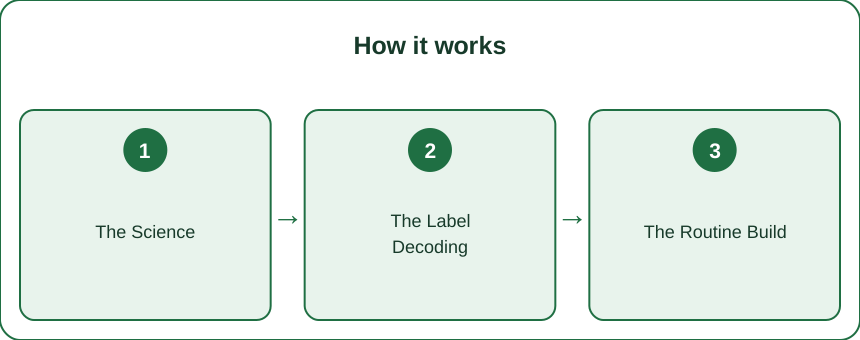
Why fragrance provokes: the allergen statistics (the fragrance mixes leading contact-dermatitis rankings year after year — the dermatology patch-test data; the single most common skincare allergen category), the sensitization mechanism (the reactions building with EXPOSURE — the product fine for months then suddenly not; the sensitization being cumulative and often permanent; the why-my-holy-grail-turned mystery solved), the natural-fragrance honesty (the essential oils being fragrance too — the lavender-and-citrus oils carrying the same allergen molecules; the ‘naturally scented’ label offering zero protection per the natural-fallacy doctrine), the damaged-barrier multiplier (the compromised skin admitting more of everything — the flare-week fragrance stinging worst per the barrier doctrine), and the sneaky-symptom picture (the low-grade redness, the vague itchiness, the ‘my skin is just sensitive’ baseline — the chronic mild irritation that fragrance-free trials often resolve; the two-week experiment being diagnostic).
The Label Decoding
Reading past the marketing: the unscented trap (the ‘unscented’ often containing MASKING fragrance — the odor-neutralizing scent chemicals; the ‘fragrance-free’ being the real claim; the two terms being legally different), the ingredient-list search (the ‘fragrance/parfum’ entry — the catch-all term hiding dozens of compounds; the essential-oil names: the lavandula, citrus and mentha entries; the linalool-and-limonene allergen callouts on EU-style labels), the trusted-shortcut brands (the sensitive-skin lines built fragrance-free — the dermatology-endorsed ranges; the whole-line trust that shortcuts label-reading per the brand doctrine), the beyond-skincare audit (the laundry detergent, the fabric softener and the hand soap touching skin all day — the body’s fragrance exposure being mostly NOT skincare; the fragrance-free laundry swap from the laundry doctrine often mattering more than any cream), and the patch-test backstop (the new products tested regardless per the patch doctrine — the fragrance-free label reducing, not erasing, reaction risk).
The Routine Build
The fragrance-free life: the core swap order (the leave-ON products first — the moisturizer, sunscreen and serums that sit on skin all day; the wash-off cleansers being lower-stakes; the priority sequence per the priority doctrine), the two-week trial (the full fragrance-free run as the diagnostic — the redness-and-comfort journal; the skin’s verdict per the tracking doctrine), the pleasure replacement (the sensory joy relocated — the texture-and-ritual satisfactions; the home-fragrance and perfume-on-clothes options keeping scent in life while off the face per the fragrance doctrine; the perfume sprayed on clothing, never on reactive skin), the reintroduction honesty (the fragranced favorite retried after calm — the informed choice; the special-occasion fragranced product being a knowing trade per the flexibility doctrine), the family spillover (the household products’ shared exposure — the kids-and-partner benefits of the laundry swap per the family doctrine), and the closing frame (the fragrance-free swap costing nothing and calming much — the cheapest sensitive-skin intervention available; the serum money saved while the skin settles; the irritant, retired from the routine and the hamper both). Fragrance-free not unscented, leave-ons first, laundry included: the calm, decoded from the label.
Fragrance is skincare’s top contact allergen and sensitization builds with exposure — your holy grail can turn on you. ‘Fragrance-free’ is the real claim (‘unscented’ can hide masking scent), essential oils count, and the laundry detergent often matters more than any cream. Two weeks fragrance-free is diagnostic.
Keep Reading
This article is for general informational purposes only and is not medical advice. Always consult a qualified health professional for guidance specific to you.