Is Double Cleansing Actually Bad for Sensitive Skin? What Dermatologists Say
Quick Answer: Double cleansing isn’t inherently bad for sensitive skin, but the standard version — an oil cleanser followed immediately by a foaming or gel cleanser — can genuinely over-strip a compromised skin barrier, which is the real mechanism behind the irritation some sensitive-skin users report, not the concept of double cleansing itself.
Half of skincare content says double cleansing is essential. The other half says it’s the reason your skin’s been reactive for weeks. Both are describing real experiences — just from different skin conditions.

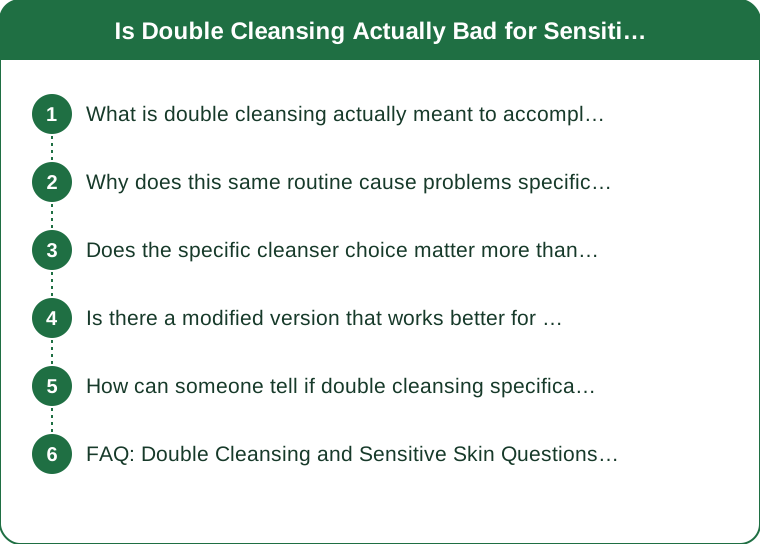
What is double cleansing actually meant to accomplish?
The first step (typically an oil or balm cleanser) dissolves sunscreen, makeup, and sebum, while the second step (typically a gentler water-based cleanser) removes residue and actually cleanses the skin itself — the logic is that a single cleanser struggles to do both jobs well, especially when heavier sunscreen or makeup is involved. For skin that tolerates it, this two-step approach can genuinely improve how well subsequent skincare products absorb, since it leaves less residue behind than a single wash.
Why does this same routine cause problems specifically for sensitive skin?
Two consecutive cleansing steps mean two rounds of surfactant contact and mechanical friction against a skin barrier that’s already compromised or reactive — for skin with an intact, resilient barrier, this is a minor consideration; for skin that’s already struggling to retain moisture and stay calm, it can be enough additional stripping to trigger visible irritation, redness, or a compromised barrier that takes days to recover from.
Does the specific cleanser choice matter more than the double-cleansing concept itself?
Significantly, yes — an oil-based first cleanser paired with a genuinely gentle, low-surfactant second cleanser causes meaningfully less irritation than two stripping cleansers in a row, or a harsh first step followed by an equally harsh second one. Sensitive-skin dermatologists more often flag the specific product combination as the actual problem, not double cleansing as a category.

Is there a modified version that works better for reactive skin?
Yes — many dermatologists recommend a micellar water or a very gentle balm as the first step, followed by either a plain water rinse or an extremely mild second cleanser, rather than the full oil-cleanser-plus-foaming-cleanser combination most tutorials show. This preserves the makeup-and-sunscreen-removal benefit while significantly reducing the total surfactant and friction exposure that triggers reactions.
How can someone tell if double cleansing specifically is the cause of new irritation, versus something else in their routine?
Removing just the second cleansing step for one to two weeks while keeping the rest of the routine identical is the most reliable way to isolate the variable — if redness, tightness, or reactivity noticeably improves during that window, double cleansing (or at least the second-step product) is a meaningful contributor worth adjusting rather than eliminating entirely.
FAQ: Double Cleansing and Sensitive Skin Questions, Answered
Is double cleansing necessary every day, or only on makeup/sunscreen days?
Most dermatologists suggest reserving the full two-step version for days with makeup or heavy sunscreen, using a single gentle cleanse on bare-skin days — this alone significantly reduces total exposure for sensitive skin without eliminating the practice entirely.
Does water temperature matter as much as the cleanser choice?
Yes, more than most people expect — hot water strips the skin barrier’s natural oils significantly faster than lukewarm water, and this effect compounds with double cleansing’s already-higher surfactant exposure.
Should sensitive skin avoid oil cleansers specifically, or just foaming ones?
Oil and balm cleansers are generally the gentler of the two categories for sensitive skin — foaming and heavily sulfate-based cleansers are more commonly the actual irritation source when double cleansing causes problems.
TL;DR:
- Double cleansing itself isn’t inherently bad for sensitive skin — the specific product combination usually is
- Two rounds of surfactant and friction can meaningfully over-strip an already-compromised barrier
- A gentle balm or micellar first step plus a mild (or skipped) second step often works better
- Removing the second step for 1-2 weeks is the clearest way to test if it’s actually the cause
The real question isn’t whether to double cleanse — it’s whether the specific two steps you’re using are gentle enough for the skin actually doing the reacting.
Keep Reading
This article is for general informational purposes only and is not medical advice. Always consult a qualified health professional for guidance specific to you.