Patch Testing Done Properly: the 7-Day Method That Actually Catches Reactions
Quick Answer: Real patch testing runs 7 days, not 7 minutes: apply the product to a small consistent spot (inner forearm or behind the ear) once or twice daily, watching for both immediate irritation AND the delayed allergic reactions that surface at day 2-7 — the window the quick-dab method misses entirely. For leave-on face products, follow a clear arm week with 3 days on a small jaw section before full-face commitment. Slow, boring, and the single best habit for sensitive skin that keeps ‘mystery reactions’ from having mysteries.
Everybody ‘patch tests’ — a dab on the wrist, an hour of nothing, full face by evening. Then day four delivers the itchy red verdict, and the product gets filed under ‘my skin is just unpredictable.’ The skin was perfectly predictable; the test just ended six days early.

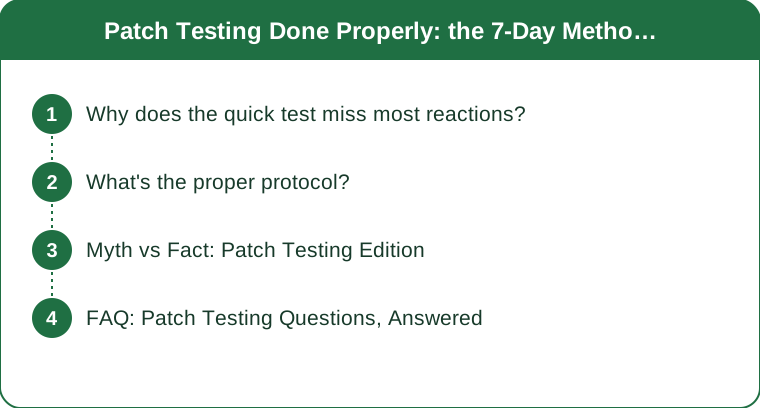
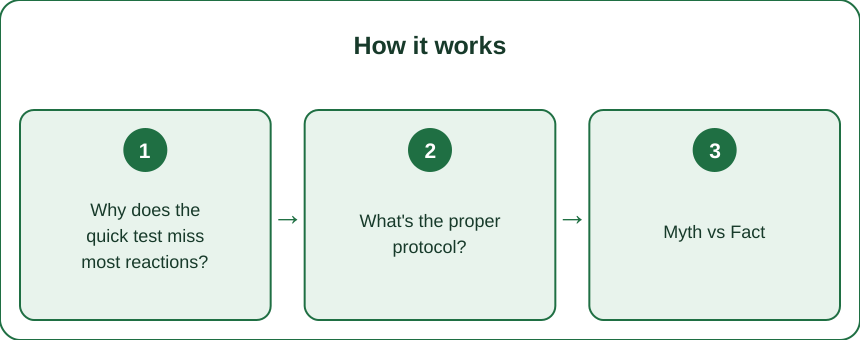
Why does the quick test miss most reactions?
Because skin reactions run on two different clocks:
- Irritant reactions (the fast clock): direct irritation — stinging, burning, immediate redness — shows within minutes to hours. The quick dab catches these, which is why it feels like it works.
- Allergic contact reactions (the slow clock): true allergic responses are immune-mediated — the T-cell machinery takes days to mount a visible response, classically surfacing 48-96 hours after exposure, sometimes a full week (and sensitization to a NEW allergen can take longer still: fine for weeks, reactive thereafter — the ‘but I’ve used it for a month!’ phenomenon). Fragrance components, preservatives, botanical extracts, and dyes — the usual sensitive-skin suspects — live mostly on this clock.
The one-hour test therefore screens for exactly the reaction type you’d notice anyway and waves through the type that ruins week two. Add the site problem — wrist skin is tougher than face skin, so even honest wrist tests under-predict facial response — and the folk method is mostly a comfort ritual. The fix isn’t more caution mid-reaction; it’s a test long enough to let the slow clock ring.
What’s the proper protocol?
Phase 1 — the arm week (days 1-7):
- Site: inner forearm (convenient, visible) or behind the ear (closer to facial skin sensitivity) — same exact spot each time, roughly coin-sized.
- Apply as the product would be used (leave-ons stay on; rinse-offs applied, left briefly, rinsed) once or twice daily.
- Check daily in good light: redness, bumps, itch, scale, or that prickling that precedes visible trouble. Any reaction = stop, done, product disqualified — washed off, noted, and the ingredient list photographed for the pattern file.
- The discipline point: days 5-7 matter as much as day 1 — the calendar reminder is doing the real testing.
Phase 2 — the face trial (days 8-10): clear arm ≠ guaranteed clear face — apply to one small consistent section (side of the jaw is the classic) for 3 days before full-face adoption.
The supporting rules:
- One new product at a time, always — two new products and a reaction = zero information. Space introductions 2+ weeks apart.
- Keep the ingredient diary: photograph the INCI list of everything that fails — after 2-3 failures, the overlapping ingredient usually names itself (fragrance/parfum and certain preservatives lead the league tables), converting you from ‘reactive skin’ to ‘allergic to X,’ which is shoppable.
- Actives note: products designed to provoke adjustment (retinoids, exfoliating acids) blur the line between expected adjustment and reaction — for those, the test is about ruling out disproportionate response, and the introduction schedule (buffering, frequency ramps) is its own topic.

Myth vs Fact: Patch Testing Edition
Myth: Hypoallergenic and fragrance-free products don’t need testing. Fact: ‘Hypoallergenic’ is a marketing term without a regulated standard, and fragrance-free products still contain preservatives, botanicals, and emulsifiers that head the allergen lists. Better-bet labels shrink the odds; the 7 days confirm them.
Myth: A reaction means the whole product category is off-limits. Fact: Reactions are ingredient-specific — one failed vitamin C serum condemns that formula, not vitamin C. The ingredient diary is what converts each failure into narrower, smarter future shopping instead of category exile.
Myth: My skin reacted immediately to something I’ve used for years — must be a bad batch. Fact: Possible but less common than the alternative: sensitization develops over time with repeated exposure — years of fine can precede genuinely allergic thereafter, most famously with fragrance and certain preservatives. Longtime-product reactions deserve the same stop-and-diary treatment as new ones.
The professional line: severe reactions (swelling, blistering, spreading rash, face/eye involvement), anything persisting past a week off the product, or a pattern of multi-product reactivity is dermatologist territory — where formal patch testing (the medical kind, with allergen panels) answers in one appointment what home testing approximates. This is general information, not medical advice.
FAQ: Patch Testing Questions, Answered
Do I really need 7 days for every single product?
Risk-tiered honesty: leave-on face products and anything fragranced or botanical-heavy — yes, full protocol. Rinse-off, body-only, and reformulations of products you tolerate — a shortened 3-4 day arm test is a reasonable compromise. The non-negotiable full-protocol category: anything going near the eyes or on already-compromised skin.
Where should I test for eye-area products?
Behind the ear beats the forearm (closer skin behavior), then the Phase-2 trial happens on the outer orbital edge of one eye only — never both simultaneously. Eye-area skin is the thinnest on the face; it gets the most conservative version of everything.
Can I patch test when my skin is already irritated or flaring?
Wait — testing on compromised skin produces false positives (everything stings on a broken barrier) and adds insult to injury. Restore baseline first (bland routine, barrier repair), then test. The corollary rule: mid-flare is also the wrong time to introduce anything new, however promising its marketing. This is general information, not medical advice.
TL;DR:
- Two reaction clocks: irritation shows in hours, true allergy at day 2-7 — the quick dab tests only the fast clock
- Protocol: 7 days on the same arm/ear spot, then 3 days on a jaw section, one new product at a time, 2 weeks apart
- Any reaction = stop + photograph the ingredient list — the diary converts ‘reactive skin’ into a shoppable allergen name
- Severe, spreading, or repeated reactions = dermatologist patch testing, the one-appointment answer
The mystery reactions were never mysterious — the test just kept ending six days before the verdict. This is general information, not medical advice.
Keep Reading
This article is for general informational purposes only and is not medical advice. Always consult a qualified health professional for guidance specific to you.