Why Sensitive Skin Reactions Usually Trace Back to Fragrance, Not the Active Ingredients Getting Blamed
A new redness or breakout after starting a skincare product gets blamed on whatever active ingredient seems most potent, retinol, an acid exfoliant, but fragrance and certain preservatives are actually the more statistically common cause of sensitive skin reactions, and they’re often overlooked entirely.
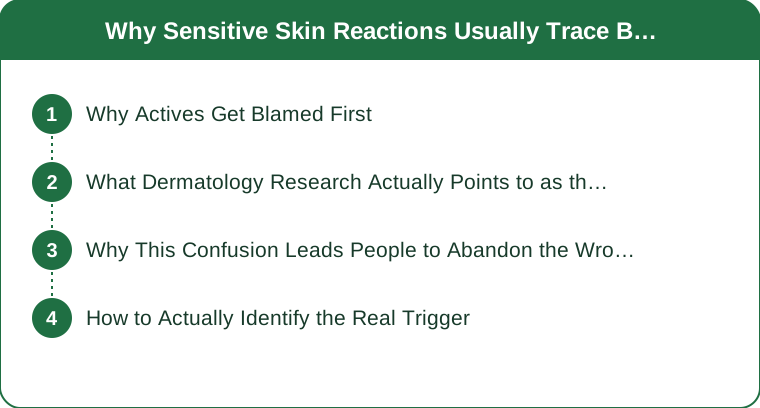
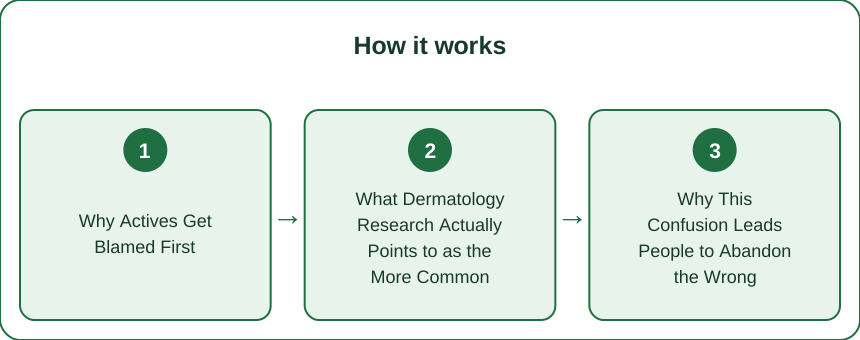
Why Actives Get Blamed First
The assumption: potent-sounding ingredients like retinol or glycolic acid seeming like the obvious suspect when skin reacts, since they’re marketed around visible, noticeable effects and therefore get associated with visible, noticeable irritation too.
What Dermatology Research Actually Points to as the More Common Trigger
The overlooked cause: fragrance ingredients and certain preservatives appearing consistently among the top identified causes of contact irritation and allergic reactions in dermatology research, often appearing in products that also happen to contain an active ingredient, which muddies the blame.
Why This Confusion Leads People to Abandon the Wrong Ingredient
The consequence: someone reacting to a fragranced retinol product often concluding retinol itself doesn’t work for their skin and avoiding it entirely, when switching to a fragrance-free version of the same active ingredient might have solved the problem without giving up its benefits.
How to Actually Identify the Real Trigger
The practical method: checking the full ingredient list for fragrance or parfum specifically before assuming an active ingredient is the cause, and trialing a fragrance-free version of the same active before ruling it out completely, and the frame (fragrance and preservatives are a more common actual cause of sensitive skin reactions than the active ingredients that get blamed — checking for fragrance first before abandoning an active can save a product that was never really the problem.)
A new redness or breakout after starting a skincare product gets blamed on whatever active ingredient seems most potent, retinol, an acid exfoliant, since those ingredients are marketed around visible effects and therefore get associated with visible irritation too, but fragrance ingredients and certain preservatives appear consistently among the top identified causes of contact irritation and allergic reactions in dermatology research, often in products that also happen to contain an active, which muddies the blame. Someone reacting to a fragranced retinol product often concludes retinol itself doesn’t work for their skin and avoids it entirely, when switching to a fragrance-free version of the same active might have solved the problem without giving up its benefits, which is why checking the full ingredient list for fragrance or parfum before assuming an active is the cause, and trialing a fragrance-free version before ruling it out, can save a product that was never really the problem.
Keep Reading
This article is for general informational purposes only and is not medical advice. Always consult a qualified health professional for guidance specific to you.