Sunscreen for Sensitive Skin: Finding the SPF That Protects Without Provoking
The sensitive-skinned face the sunscreen paradox — the product they need most is the one that stings, burns eyes and triggers breakouts — and the fix is formulation literacy, not abandonment. The sensitive-SPF guide: the problem, the selection and the craft.

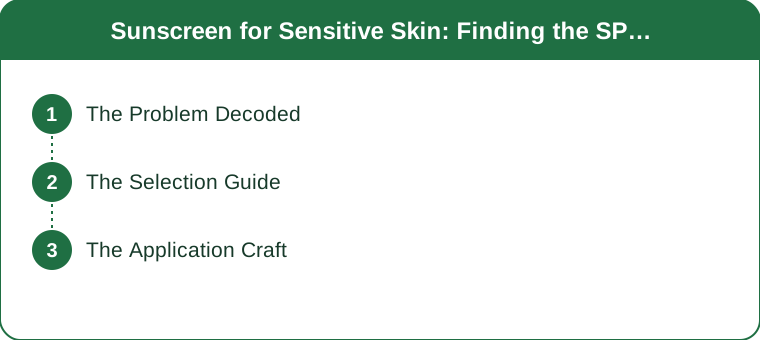
The Problem Decoded
Why sunscreens provoke: the filter chemistry (the chemical-filter stinging — the avobenzone-and-friends absorption mechanism that sensitive skin registers; the eye-sting migration on sweaty days), the fragrance-and-extras layer (the added fragrance being the most common irritant per the sensitivity doctrine — the botanical extracts sounding gentle and provoking anyway; the alcohol-heavy sprays’ dryness tax), the breakout confusion (the comedogenic-formula congestion versus true irritation — the different problems needing different fixes per the acne doctrine), the barrier context (the compromised barrier feeling EVERYTHING — the sunscreen stinging worse during flares; the barrier repaired first per the barrier doctrine), and the stakes restated (the sensitive skin needing sun protection MORE — the reactive skin’s inflammation plus UV; the abandonment being the worst outcome per the sunscreen doctrine).

The Selection Guide
Choosing the gentle SPF: the mineral-first rule (the zinc-oxide-and-titanium-dioxide filters sitting ON skin — the physical mechanism sensitive skin tolerates best; the zinc’s own soothing reputation), the formula checklist (the fragrance-free non-negotiable — the alcohol-light preference; the short-ish ingredient lists per the label doctrine; the ‘sensitive’ front-label verified against the back panel), the white-cast honesty (the mineral trade-off named — the modern micronized-and-tinted options shrinking it; the tinted-mineral tier solving cast AND adding iron-oxide visible-light protection: the melasma-prone bonus), the texture matching (the lotion-cream tier for dry-sensitive — the gel-cream and fluid options for oily-sensitive per the skin-type doctrine; the stick formats for eye-area and touch-ups), the hybrid middle ground (the newer-generation chemical filters gentler than the old guard — the mineral-chemical hybrids as the compromise tier for cast-haters), and the eye-area strategy (the mineral stick around eyes — the sting-free zone engineering; the hat-and-sunglasses as the eye area’s real SPF per the sun doctrine).
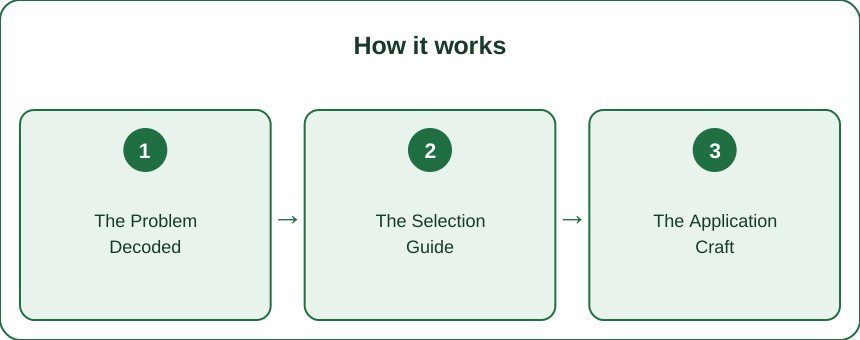
The Application Craft
Using it without drama: the patch-test protocol (the new SPF tested on the jaw-or-inner-arm for three days — the face spared the experiment per the patch doctrine), the barrier-first layering (the moisturizer settled before SPF — the buffer that reduces sting; the damaged-barrier weeks using the richest tolerated base), the quantity honesty (the two-finger dose still applying — the sensitive-skin under-application temptation resisted; the protection requiring the full amount per the sunscreen doctrine), the reapplication solutions (the powder-and-stick toppers over midday re-creaming — the sweat-day management from the sweat doctrine), the removal gentleness (the evening double-cleanse done soft — the mineral SPF needing the oil step; the scrubbing ban per the cleansing doctrine), the flare-week adaptations (the sunscreen continued through mild flares with the gentlest formula — the severe-flare weeks leaning hat-and-shade harder; the dermatologist partnership for the chronic per the medical doctrine), and the closing push (the gentle SPF found once serving for years — the repurchase loyalty per the routine doctrine; the sun protected against without the daily sting; the paradox, solved by reading one label carefully). Mineral, fragrance-free, patch-tested: the SPF, finally on your side.
Sensitive skin needs mineral-first: zinc-oxide, fragrance-free, patch-tested on the jaw for three days before the face. Tinted minerals solve the white cast and add visible-light protection, sticks handle the eye zone, and the full two-finger dose still applies — under-applying isn’t gentler, just unprotected.
Keep Reading
This article is for general informational purposes only and is not medical advice. Always consult a qualified health professional for guidance specific to you.