Why 'Unscented' Skincare Can Still Irritate Sensitive Skin (and 'Fragrance-Free' Usually Doesn't)
Choosing ‘unscented’ products specifically to protect sensitive skin can backfire, because unscented usually means a masking fragrance was added to cancel out other ingredient smells — not that fragrance was left out entirely the way the word implies.
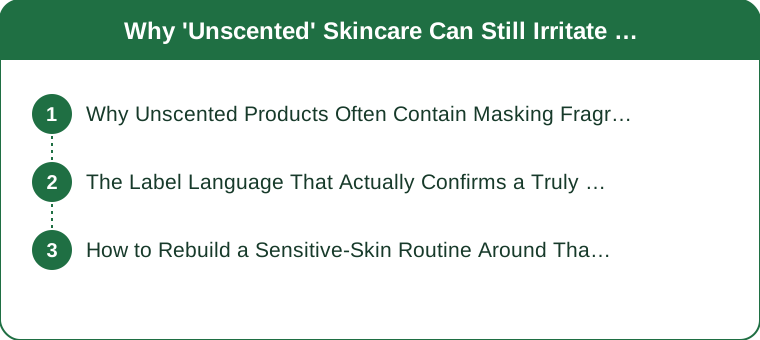
Why Unscented Products Often Contain Masking Fragrance Rather Than None at All
The label-language gap: the unscented-means-no-perceptible-smell-not-no-fragrance-ingredient (the term describing the final sensory result rather than the actual ingredient list — the describes-result-not-ingredients), the the-masking-fragrance-is-added-specifically-to-cancel-other-smells (the manufacturers adding a fragrance compound purely to neutralize the base formula’s natural odor — the fragrance-added-to-mask), the the-masking-fragrance-can-still-trigger-the-same-sensitivities-as-regular-fragrance (the added compound being chemically similar enough to standard fragrance to cause the same reactions in sensitive skin — the same-irritant-potential), and the reframe (unscented describing an absence of smell, not an absence of the fragrance ingredient that actually causes irritation for a lot of sensitive-skin users).
The Label Language That Actually Confirms a Truly Fragrance-Free Product
What to look for specifically: the fragrance-free-on-the-label-means-no-fragrance-ingredient-added-at-all (the specific phrase indicating the formula genuinely omits any fragrance compound, masking or otherwise — the specific-phrase-confirms-omission), the the-check-the-actual-ingredient-list-for-parfum-or-fragrance (the scanning the full ingredient list rather than trusting the front-of-package claim alone — the check-ingredient-list-directly), the the-essential-oils-count-as-fragrance-even-when-marketed-as-natural (the plant-derived fragrance ingredients triggering the same sensitivity risk despite a natural or clean framing — the natural-fragrance-still-counts), and the frame (the phrase fragrance-free on the label, confirmed by checking the ingredient list for parfum or essential oils, being the actual reliable signal — not the word unscented alone).
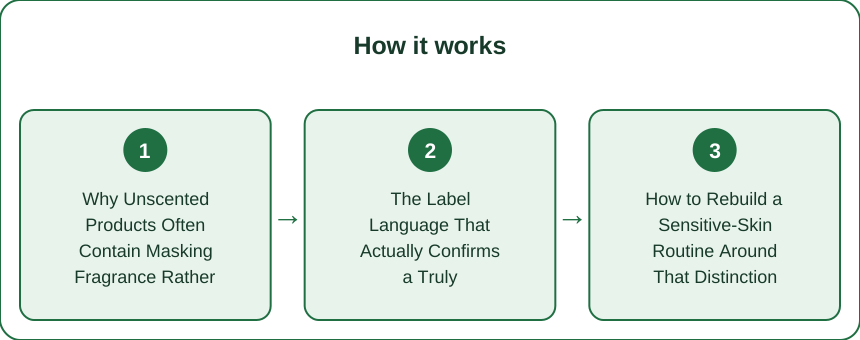
How to Rebuild a Sensitive-Skin Routine Around That Distinction
The practical rebuild: the swap-unscented-products-for-verified-fragrance-free-ones-one-at-a-time (the replacing products gradually rather than all at once, to isolate which swaps actually reduce irritation — the gradual-one-at-a-time-swap), the the-patch-test-each-new-fragrance-free-product-before-full-use (the testing a small area first even with a fragrance-free label, since other ingredients can still irritate — the patch-test-regardless), the the-keep-a-simple-log-of-what-was-swapped-and-when (the tracking changes against symptom timing to actually identify what helped — the track-swaps-against-symptoms), and the frame (swapping products one at a time for genuinely fragrance-free versions, patch testing each new one, and logging changes against symptoms — a methodical rebuild rather than switching everything at once and guessing at what worked).
Choosing unscented skincare specifically to protect sensitive skin can backfire, because unscented describes the absence of a perceptible smell, not the absence of fragrance ingredients — manufacturers often add a masking fragrance to cancel out a formula’s natural odor, and that added compound can trigger the same sensitivities as regular fragrance. The reliable signal instead is the specific phrase fragrance-free on the label, confirmed by checking the actual ingredient list for parfum or fragrance, since even natural-marketed essential oils count as fragrance and carry the same irritation risk. Rebuild a sensitive-skin routine by swapping unscented products for verified fragrance-free ones one at a time, patch testing each new product regardless of its label claim, and keeping a simple log of what was swapped and when to actually identify what helped.
Keep Reading
This article is for general informational purposes only and is not medical advice. Always consult a qualified health professional for guidance specific to you.